When Lagos Turns White
Eyo changes the visual language of Lagos Island.
The streets fill with white-clad figures, covered faces, wide hats, staffs, songs, processional order, and public attention. The modern city is still there, but for the duration of the Adamu Orisa Play, traffic, architecture, politics, tourism, memory, and ritual authority begin to share the same streets.
Eyo is often called a masquerade festival. That phrase is familiar, but it can also be too small. Lagos-focused writer Emmanuel Solate argues that Eyo is better understood as ritual authority made visible, not entertainment alone. Lagos State public language also frames Eyo as a living archive of Yoruba heritage, unity, purity, communal strength, and collective memory.
For Afrika Masq, Eyo matters because it shows a city remembering itself in public.
Adamu Orisa And The Custodians Of Isale Eko
The formal name Adamu Orisa Play places Eyo inside a Lagos ritual and civic world rather than only a tourist spectacle.
Public Lagos sources connect the festival to Lagos Island, the Oba of Lagos, White Cap Chiefs, Olori Eyo or Akinsiku, the Council of Adamuorisa, and the people of Lagos. These references matter because Eyo is governed by custodianship. It is not something anyone can stage casually because it looks beautiful in photographs.
The festival is usually convened for significant occasions: honouring departed leaders or eminent Lagosians, marking transitions, reinforcing civic memory, or celebrating moments that require public recognition. In 2025, Lagos State described its return after eight years as an affirmation of Lagos identity, resilience, and connection to history.
A responsible article should keep that ceremonial governance in view. The white robe is not only costume. It belongs to order.
Honour, Ancestry, And Public Memory
Eyo is deeply connected to honouring the dead and restoring public memory.
Lagos State's account of the 2025 festival describes the Eyo tradition as escorting great contributors to the ancestral realm and marking transitions of kings, leaders, and epochs. Africanews and other public accounts similarly describe Eyo as staged for major occasions such as coronations, the passing of prominent indigenes, and civic remembrance.
This does not mean every Eyo appearance has the same meaning or origin story. Public accounts vary, and some narratives connect Adamu Orisa to Lagos, Iperu-Remo, royal history, or the memory of earlier Lagos rulers. The right public approach is to acknowledge that origin and transmission claims require careful attribution.
What is clear is that Eyo turns remembrance into procession. It gives Lagos a way to honour, escort, and publicly recognize lives and legacies that matter to the city.
The Regalia Of Order
Eyo's white regalia creates one of the most recognizable images in Nigerian cultural life.
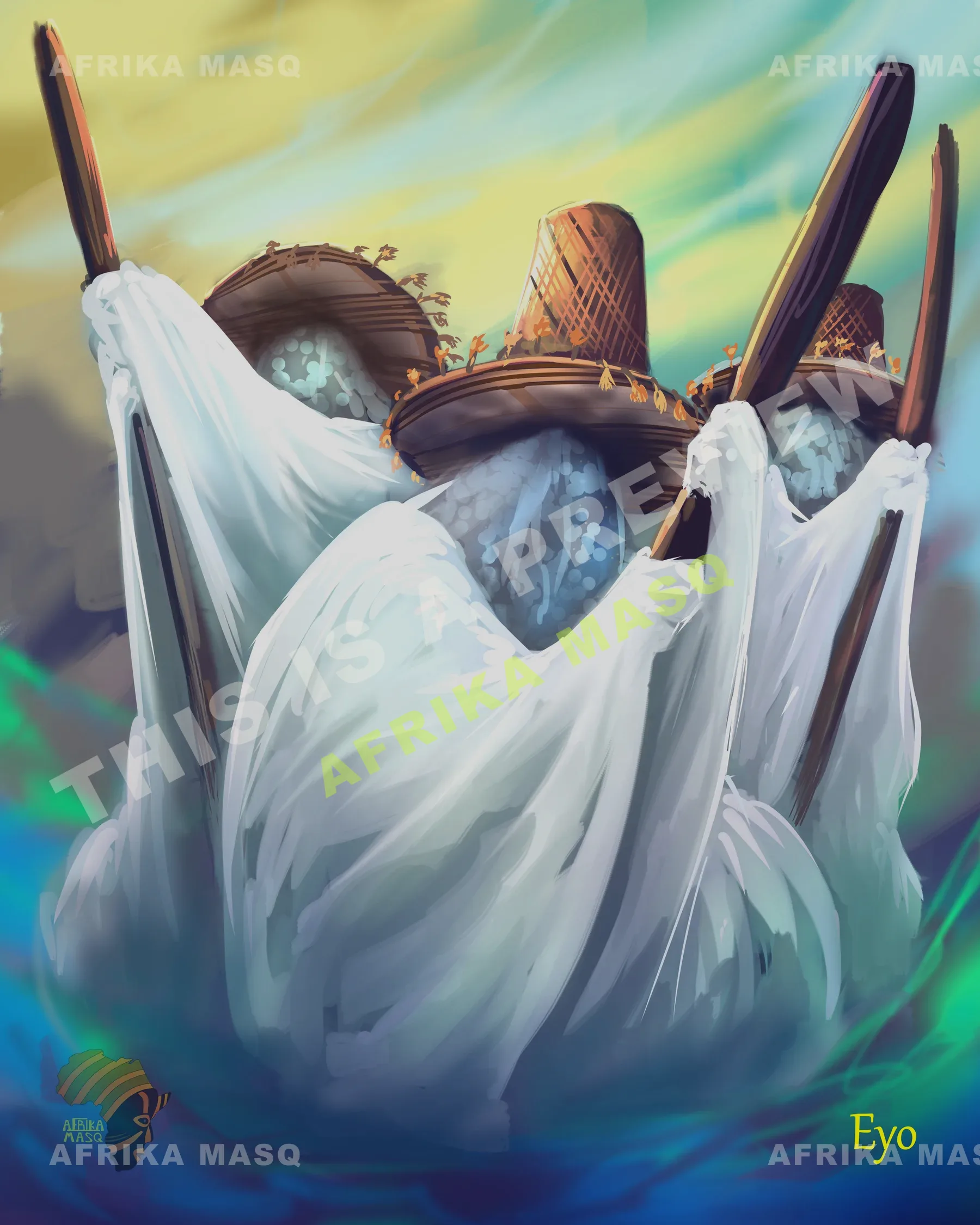
The figure is typically seen in flowing white cloth, covered face, gloves, socks, distinctive hat, and the opambata staff. Public descriptions also identify different Eyo groups, colours, hats, and symbols connected to houses or lineages. The visual unity is powerful, but the details still mark rank, affiliation, and ceremonial order.
The opambata is not a random prop. The staff helps maintain order, rhythm, and presence. The hats and colours are not only decorative. They can identify groups within the Adamu Orisa structure. The white clothing can signal purity, spiritual seriousness, and unity, but readers should avoid assuming one simple explanation covers every group and context.
Eyo shows how a city can use disciplined visual repetition to create ceremony.
Rules That Change The Street
Eyo is surrounded by etiquette.
Public accounts describe restrictions around clothing, hats, shoes, smoking, motorcycles, bicycles, hairstyles, and behaviour during the event. These rules are sometimes repeated in popular media as curiosities, but they should be understood more seriously. They help distinguish ceremonial time from ordinary street life.
When Eyo enters the street, spectators are not simply consumers of a show. They become people inside a regulated public space. The rules remind the crowd that this is an event of authority, not only a parade.
This is one reason Eyo remains powerful in Lagos. It temporarily reorganizes the city around memory, hierarchy, respect, and ritual discipline.
A Lagos Tradition In A Global City
Modern Lagos is a megacity, a commercial centre, a media capital, and a place of constant reinvention. Eyo survives inside that speed.
The 2025 return of Eyo after an eight-year pause made the tension visible. State and media sources celebrated tourism, diaspora attention, cultural pride, and global visibility. Lagos-focused commentary also warned against reducing Eyo to spectacle or a brand image detached from its operative ritual logic.
Both sides matter. Public attention can help younger generations and diaspora audiences reconnect with Lagos heritage. But tourism language can flatten Eyo into white robes and photo opportunity if it forgets ancestry, custodianship, order, and ceremony.
Afrika Masq's job is to keep the deeper frame visible.
Seeing The Afrika Masq Artwork
The Afrika Masq Eyo artwork should be read as Lagos memory in motion.
It can show elegance, white regalia, height, stillness, procession, and dignity. It can suggest the way a figure commands the street. But it cannot replace the sound of staffs, the order of groups, the authority of custodians, the restrictions observed by spectators, or the emotional weight of honouring the dead.
The artwork should therefore point viewers back to Isale Eko, Adamu Orisa, Lagos Island, and the custodial structures that make the festival meaningful. It should invite learning rather than treating Eyo as a decorative Lagos icon.
The beauty is real. The authority behind the beauty is the story.
Why Eyo Matters
Eyo matters because it lets Lagos become ceremonial in public.
It carries ancestry into the street. It turns memory into movement. It gathers custodians, lineages, leadership, crowds, city space, etiquette, and visual discipline into one public act. It reminds a fast modern city that heritage is not only preserved in buildings or books. It can be performed through order, restriction, procession, and collective attention.
For Afrika Masq, Eyo is a reminder that public beauty can also be public responsibility. The article must resist the easy language of spectacle and return the image to Lagos, to Isale Eko, and to the people who carry Adamu Orisa as living heritage.
Help improve this record: if you are a Lagos, Isale Eko, Adamu Orisa, Eyo, Yoruba cultural custodian, researcher, practitioner, or reader with stronger references, share a comment below with the source and context. Verified contributions can be credited in future updates.
Comments
Join the conversation
Share your thoughts on this story. If you notice a correction, missing context, or a useful reference, include it and we will review it before publishing.
Loading comments...